MalaGIS

Sharing GIS Technologies, Resources and News.

Generate 3D City Models from OpenStreetMap Data in the Browser with map3d

When working on digital twins, unified city dashboards, campus inspections, or drone survey result displays, you often need to show city white models (untextured 3D buildings). Traditional GIS data processing workflows usually involve assembling models in desktop software and then importing them into an engine, which comes with significant debugging and collaboration overhead. If you could quickly select an area in the browser, turn buildings and roads into a rotatable 3D scene, and even directly export common 3D formats for other systems, it would greatly simplify many GIS and web visualization scenarios.

In recent years, web-based 3D technology stacks have become increasingly mature, and more projects are bridging open map data with front-end rendering. I recently came across a very popular project, cartesiancs/map3d, which can generate urban 3D white models from OSM data with one click and export them in GLB format. Let me introduce it today.

more >>

A GIS Practitioner's Guide: The Quest for POI Data on "Free Noodle Refill" Restaurants

A few days ago, news about the "noodle refill" incident in Jiajiang County, Leshan, Sichuan Province, became a hot search topic, and someone also shared this news in the "Malá Là GIS" group chat. While debates about cultural differences and other issues were still raging on Weibo, a breath of fresh air appeared in our GIS group when someone asked: How can we obtain POI data for restaurants that offer "free noodle refills"? (See? Our GIS group truly has a professional spirit.)

As you know, I usually don't slack off, but I couldn't resist such an interesting GIS question. I consulted with various experts and did some hands-on experimenting. Although the final result wasn't entirely satisfactory, I'll still summarize the process for everyone today.

Traditional POI Databases

I've shared many POI datasets before, the most famous being the POI dataset from OSM. However, I found that the data fields provided by such sources are currently too simplistic, as shown below:

more >>

Unlocking Global Renewable Energy Insights: The Global Renewables Watch (GRW) Dataset

For GIS professionals, obtaining high-precision, global distribution data for energy facilities—particularly emerging sources like photovoltaics (PV) and wind power—is often challenging. While open-source maps like OpenStreetMap provide some data, they frequently fall short in terms of timeliness, coverage, and attribute detail required for rigorous scientific research or commercial analysis. Recently, Microsoft, in collaboration with organizations like The Nature Conservancy (TNC), launched a significant open-source project on GitHub called the Global Renewables Watch (GRW). The research team utilized high-resolution satellite imagery and deep learning image segmentation models to conduct a quarterly analysis of global high-resolution satellite images from Q4 2017 to Q2 2024. This process automatically identified PV and wind power installations worldwide, accompanied by estimated construction dates and pre-construction land use information.

Data Overview

Coverage: Globally processed
Data Volume: Over 13 trillion pixels
Detections:

  • PV Power Plants: 86,410
  • Wind Turbines: 375,197
    Data Format: gpkg (GeoPackage)
    Temporal Range: Q4 2017 to Q2 2024

more >>

GOB Format: Enhancing OSM Data Distribution and Processing Efficiency

GIS professionals often work with OSM (OpenStreetMap) data, which has a strong reputation in the open data domain. However, in recent years, as OSM data continues to expand globally with increasing geographic features, frequent updates, and wide regional distribution, importing and processing OSM data has become highly time-consuming and hardware-intensive. Although the traditional .osm.pbf (Protocolbuffer Binary Format) is widely used, it still faces performance bottlenecks, especially on machines with limited hardware resources. Recently, the GeoDesk team introduced the GOB data format, aiming to improve the efficiency of data distribution and import, making OSM data processing lighter and faster.

more >>

OSRM: Open Source Routing Machine

OSRM (Open Source Routing Machine) is a high-performance routing engine written in modern C++, specifically designed for computing the shortest path in road networks. Its core objective is to provide a fast, reliable, and customizable routing solution capable of handling continental-scale road network data, returning results in milliseconds. It serves as an ideal underlying engine for building applications such as map navigation, logistics distribution, and location-based services.

more >>

Geo Hound: Automatically Discover and Capture GIS Map Services from Any Website

As GIS professionals, we often browse websites with embedded maps and wonder: "Which map service is this? Can I use it in my own projects?" While some sites credit their map providers, many obscure this information, making it increasingly difficult to identify useful basemaps.

Is there a tool that automatically detects map service URLs while browsing and even formats them for direct import into GIS software like ArcGIS or QGIS?

Meet Geo Hound – the solution!

more >>

How the Renaming of the Gulf of Mexico Impacts the GIS Industry

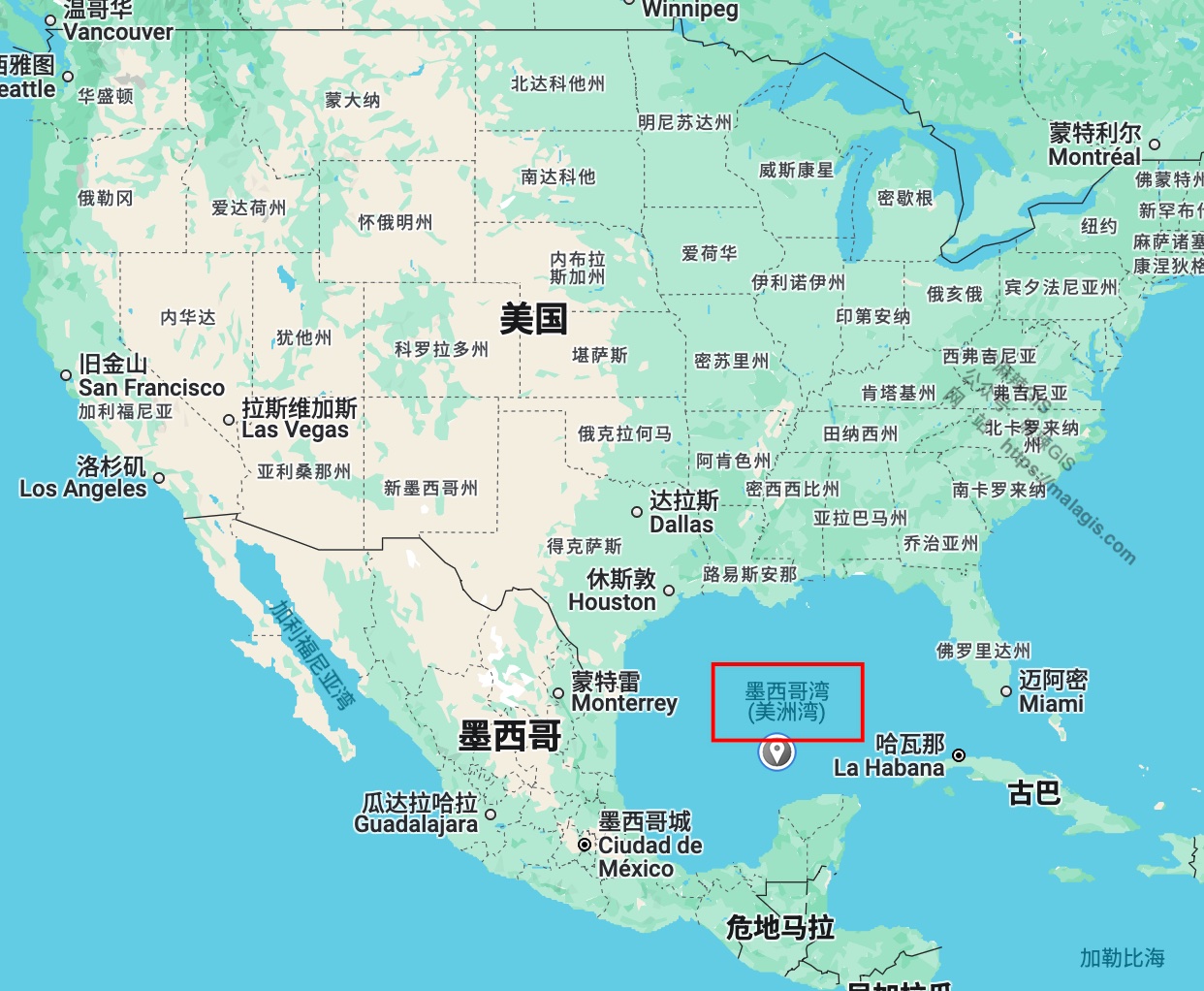
Since U.S. President Donald Trump's executive order on his first day in office renamed the Gulf of Mexico to the "Gulf of America," the ripple effects have begun to spread. Recent reports indicate that major map service providers like Google Maps have already followed suit. But how does this change affect GIS professionals in China, and how should we respond? This article provides a brief analysis.

Updates from International Map Services

After reviewing services like Google Maps, Bing Maps, OpenStreetMap, and Cesium, here’s a summary of how each platform is handling the name change.

Google Maps

Google Maps was one of the first to react. Here's how it looks now:

more >>

Copyright © 2020-2026 MalaGIS Drive by Typecho & Lingonberry Sitemap

Back to top