MalaGIS

Sharing GIS Technologies, Resources and News.

Global Remote Work Platforms for GIS Professionals

Following previous discussions on GIS side gigs, this guide addresses practical approaches to earning internationally. Given higher labor costs in developed countries, leveraging currency exchange rates makes international remote work particularly advantageous for GIS specialists. For context, consider these cases:

  1. Chengdu programmer fined for overseas remote work: https://www.sohu.com/a/724375120_121333743
  2. US developer outsourced work to China, earning $200k/year: https://cloud.tencent.com/developer/article/1547440

The principle remains: Competing globally often yields better returns than domestic markets.

Read More >>

All history Map: Integrating Geography, Figures, and Events

Following our previous article 《「GIS Resource」Sharing WMTS Service for Chinese Historical Maps》, many users adopted the historical territory maps. However, those maps lacked contextual historical figures and events. Based on reader recommendations, we present a more comprehensive solution:

Read More >>

Official Autodesk IFC Manual: Essential Resource for BIM Professionals

Recent work involving IFC standards led me to Autodesk's official documentation, which I'm sharing here:

Read More >>

Real-Time Visualization Tool for Tracking Global Satellite Orbits

Following our previous article 《A WMTS Service for Historical Chinese Maps: How to Load in QGIS》, colleagues inquired about websites for querying global satellite parameters. Coincidentally, I recently discovered such a platform through video recommendations. The website remains operational and is shared here for relevant needs.

Read More >>

A WMTS Service for Historical Chinese Maps: How to Load in QGIS

Recently, someone in the Malagis GIS group was looking for historical maps of Chinese dynasties. While a friend from Qingdao shared some high-resolution scanned maps, I remembered seeing an online historical map service maintained by an institute in Taiwan. After asking GPT, I found it again. If you're interested in historical geography, this is a valuable resource.

Read More >>

ArcGIS 10.8.2 Desktop Installation Package

Share the official ArcGIS 10.8.2 installation package (ISO format) containing all Desktop components, including the Simplified Chinese language pack. Additionally, a "Learning Edition" package is provided with all components, Chinese language support, and supplementary tools for unrestricted use.

Since launching ArcGIS Pro, ESRI has shifted focus away from ArcGIS Desktop. ArcGIS 10.8.2 represents the final major release of the ArcMap series. Despite this, it remains a robust solution for users transitioning from ArcGIS Pro.

Read More >>

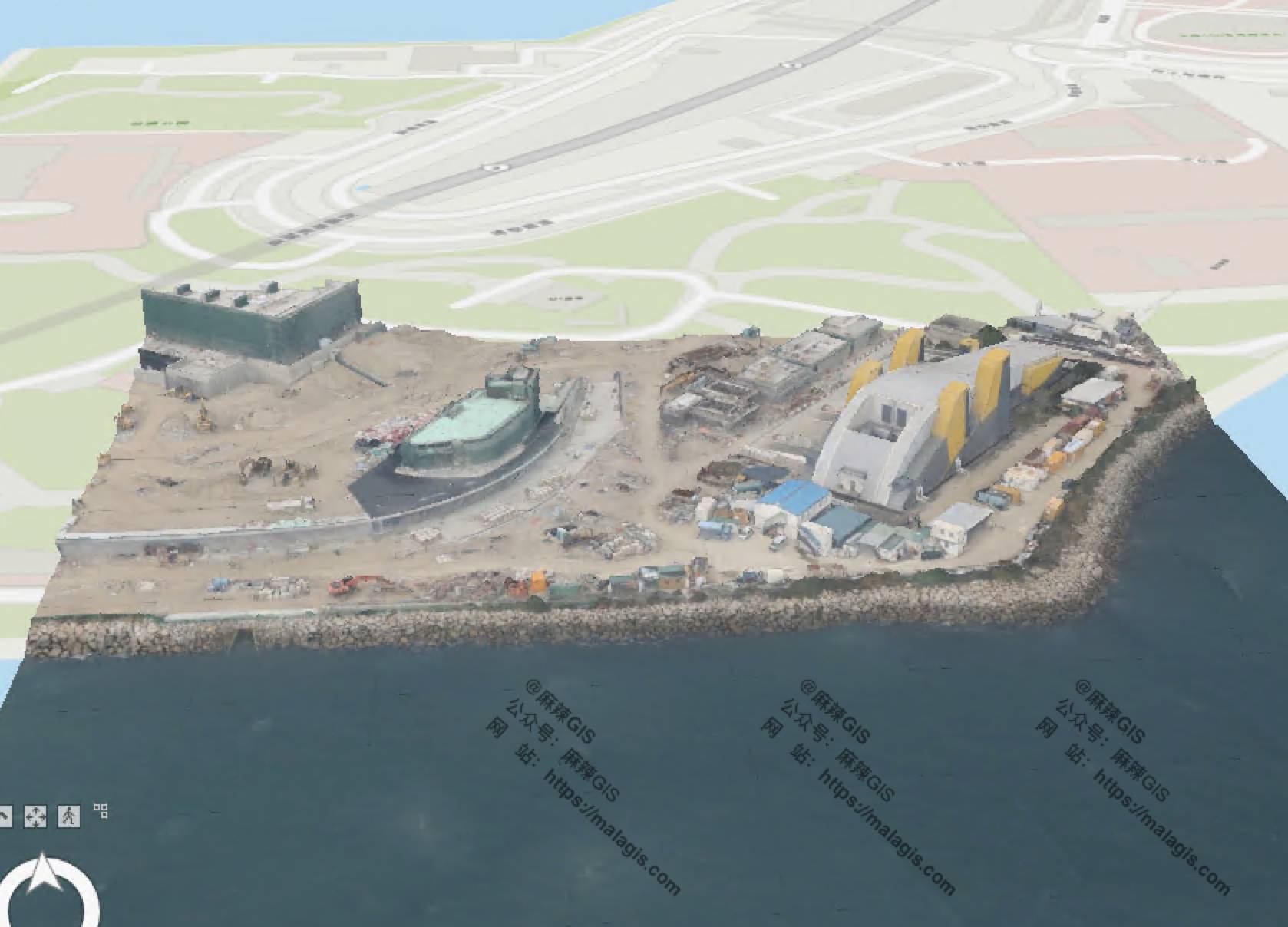
Processing OSGB Oblique Photography Data in ArcGIS Pro: A Step-by-Step Guide

Recently, while testing OSGB data and related software, I explored using ArcGIS Pro for this purpose. After successful verification, this article documents the specific workflow.

Required Tools

  1. ArcGIS Pro 3.0/3.1 (Other versions & ArcMap untested)
  2. Sample oblique photography dataset

Read More >>

Calculating Polygon Centroids: Principles and Implementation

In a previous article "Adding Centroid Coordinates in QGIS Using Field Calculator", we demonstrated adding centroid coordinates via QGIS. This article explains the mathematical principles behind centroid calculation for polygons.

Read More >>

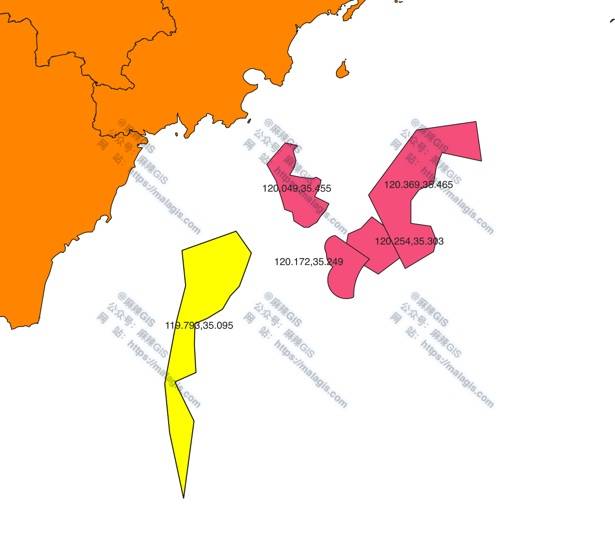
Exporting SHP Feature Coordinates to TXT in QGIS: Practical Methods

When working with large SHP boundary files, exporting coordinates of specific district boundaries to TXT is straightforward in QGIS. Here are three approaches:

Method 1: GeoJSON Export

  1. Open SHP file and select target feature

Read More >>

Python GDAL Tutorial: Raster Data Processing Essentials

This article summarizes common Python GDAL code snippets for geospatial data processing. GDAL (Geospatial Data Abstraction Library) is a foundational library for handling raster and vector geospatial data, maintained by the Open Source Geospatial Foundation (OSGeo). Implemented in C/C++, it provides Python, Java, and other language bindings. When calling GDAL's API in Python, the underlying execution relies on compiled C/C++ binaries.

GDAL Official Site: https://gdal.org/
Python API Documentation: https://gdal.org/api/index.html#python-api

Read More >>

Copyright © 2020-2026 MalaGIS Drive by Typecho & Lingonberry Sitemap

Back to top